


Progress is promising, but sustained conservation efforts are still needed.
March 18, 2026

Newly released data show the eastern monarch butterfly population has grown for a second consecutive year, offering a hopeful sign for a species that has declined by approximately 85–90% since the mid-1990s. The latest annual survey of overwintering monarchs in Mexico estimates the population at 2.93 hectares, according to the latest survey released by the World Wildlife Fund–Telmex Telcel Foundation Alliance (WWF) and Mexico’s National Commission of Protected Natural Areas (CONANP). This represents about a 64% increase compared to last year’s estimate of 1.79 hectares.
“While these gains are encouraging, monarch populations remain below historic levels. Scientists generally consider six hectares of overwintering monarchs the threshold for a resilient population capable of withstanding environmental pressures,” said Katie Hawk, Executive Director of the Oklahoma Monarch Society. “Two years of growth is promising and gives us hope that the population will reach that benchmark.”
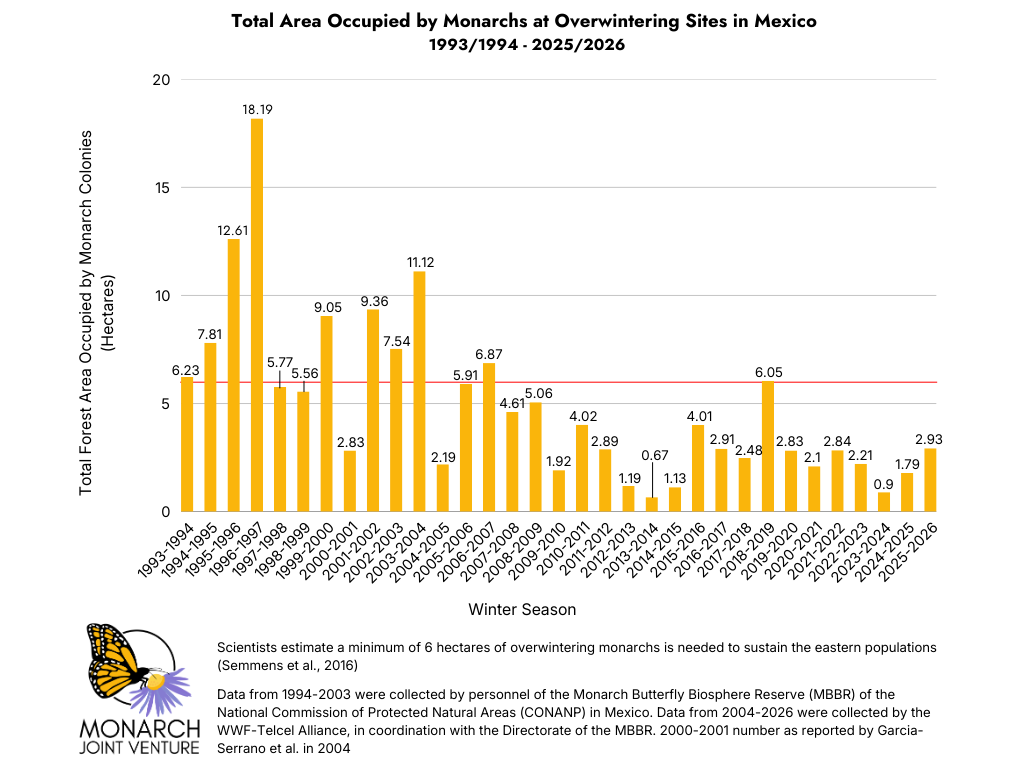
Weather conditions likely contributed to the recent increase. Much of the monarch breeding range across the central United States experienced favorable moisture last year, supporting the growth of milkweed and nectar plants that monarchs rely on during breeding and migration. However, experts emphasize that weather-driven improvements alone cannot ensure long-term recovery. Habitat loss, changing agricultural practices, extreme weather, and climate change continue to threaten monarch populations across North America.Conservation organizations, agencies, farmers, and communities are working together to restore habitat by planting milkweed and native flowering plants throughout the monarch’s range. Sustained conservation efforts remain essential to rebuilding monarch populations to healthy levels.
“We are grateful for the efforts of monarch enthusiasts statewide for creating critical habitat and reducing threats like pesticides. We will remain committed to collaborating with our partners and encourage the public to join us to ensure their populations continue to thrive,” said Hawk.
Why Monarch Numbers Fluctuate
Year-to-year changes in monarch abundance reflect the complex and dynamic nature of their annual life cycle. Population size depends on conditions across the entire migratory range, including the availability of milkweed and nectar plants during the breeding season, weather conditions along the migration route, and habitat quality at overwintering sites. Favorable conditions in one stage of the cycle cannot fully offset challenges in another.
Conditions during the 2025 breeding season were more favorable for monarchs than in 2024, Dr. Karen Oberhauser wrote in an update for Journey North, a community science program of the Monarch Joint Venture. You can read her analysis of this year's numbers here.
Regardless of short-term fluctuations, monarchs continue to face persistent stressors. Habitat loss across agricultural, urban, and transportation landscapes has reduced the availability of breeding and migratory resources. Extreme weather events, changing climate conditions, and pesticide exposure further affect survival and reproductive success. Monarchs are also affected by predators, parasites, and disease, which can vary regionally and annually.
Why Monarchs?
Pollinators play a crucial role in food production, influencing roughly a third of the crops we rely on. They are especially vital for nutrient-rich and economically important crops grown across North America, such as blueberries, apples, peaches, tomatoes, and nuts. Supporting monarchs by planting milkweed and native wildflowers benefits not only this iconic species but also a wide range of other pollinators, strengthening ecosystems and helping maintain the biodiversity essential to healthy food systems.
Monarchs are easy to monitor and serve as a visible indicator of pollinator health. Changes in their populations often reflect broader challenges facing many pollinators, including habitat loss and climate pressures.
Concerns about long-term declines in monarch populations have prompted an ongoing review under the Endangered Species Act. After a petition to list the monarch butterfly was submitted in 2014, the U.S. Fish and Wildlife Service (USFWS) determined in 2020 that listing was warranted but precluded, placing the species on the candidate list. In December 2024, the USFWS published a proposed rule to list the monarch as threatened, accompanied by a proposed 4(d) rule and critical habitat designation, and in September 2025, moved the rulemaking to a “long-term action” designation in the Unified Agenda, indicating additional time is needed before a final determination. While monarchs are not yet listed, these actions reflect concerns about long-term population stability and the cumulative effects of multiple threats.
Create Pollinator-Friendly Yards at Home
Residents can support monarchs and other pollinators through simple yard actions. Allowing lawns to grow a little longer—mowing every two or three weeks instead of weekly—encourages quick-blooming flowers such as dandelions, clovers, and henbit to emerge naturally, providing early nectar when pollinators may have little else to feed on. Even small patches of flowering plants offer valuable habitat for butterflies and other pollinators. Homeowners can learn more about adjusting mowing practices at Mowing for Monarchs.
Planting native milkweed and wildflowers is especially important. Milkweed is the only plant where monarchs lay their eggs and the sole food source for caterpillars, while native wildflowers provide nectar that fuels monarchs during their long migration south. Residents can plant native species in gardens, along roadsides, or in containers. Resources on what to plant, where to buy native plants, and upcoming plant sales can also be found at okiesformonarchs.org.
Become a Community Scientist
As monarchs migrate through Oklahoma, residents can help track their journey by reporting sightings of adults, caterpillars, or eggs on milkweed. Observations can be submitted to Journey North, helping researchers monitor migration timing, population trends, and habitat use. Including photos improves data quality and helps verify sightings. Residents can also view Journey North’s interactive migration map to see where monarchs are currently being reported.
Get Your Monarch License Plate Today!
Join the growing number of Oklahomans who are supporting our conservation efforts by showing their pollinator pride with monarch license plates. $20 from each plate purchase and renewal benefits our efforts to save the monarchs.
