

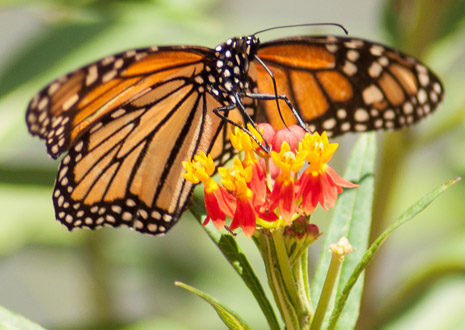
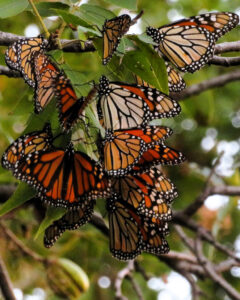
The Monarch butterfly is a key flagship species for conservation, acting as a charismatic ambassador to empower the public to take action for pollinators.
Biologists refer to monarchs as the "Canary in the Coalmine" meaning their declining population serves as a warning sign about the health of the broader ecosystem. Efforts to protect monarchs benefit other pollinators, bees, birds and native wildlife.
Why We NEED Pollinators
Pollinators influence about a third of total food production. They’re especially vital to some of our most nutrient-rich and economically valuable crops—like coffee, chocolate, blueberries, peaches and nuts. Without these pollinators to assist in fertilization, many crops could suffer drastic yield reductions.
THEIR DECLINE
In the last decade, due to habitat loss and other factors, monarch butterfly populations have plummeted at an alarming rate.
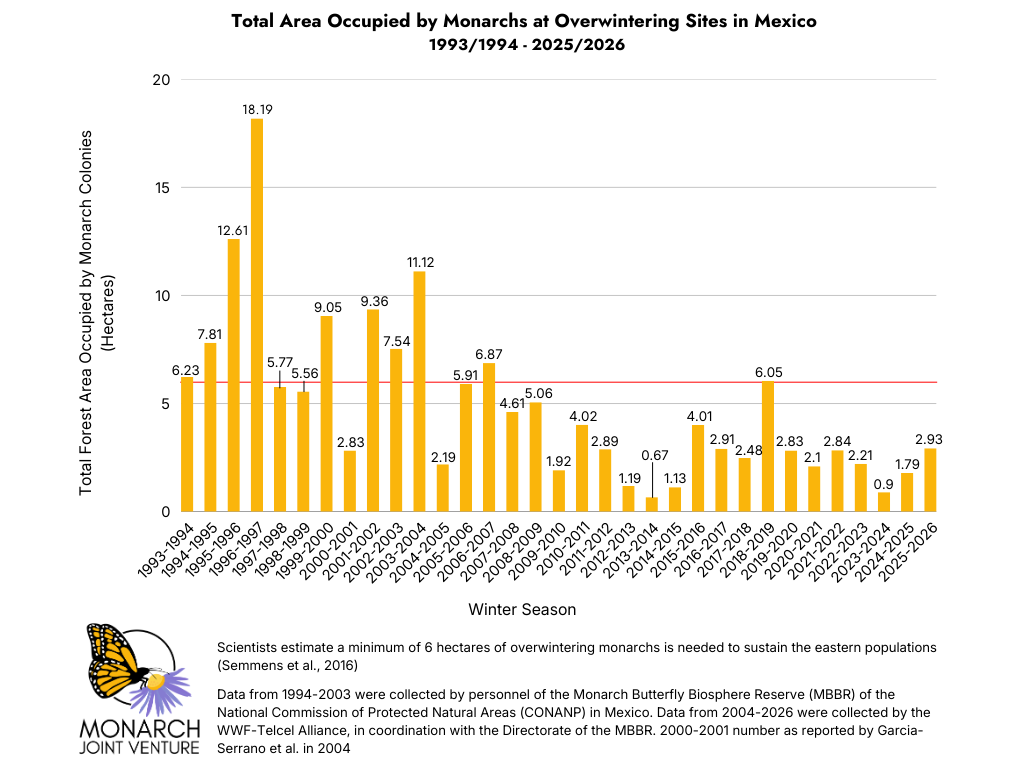
Monarch populations are measured by the total forest area occupied by overwintering monarch colonies. As of March 2026, Monarch butterflies occupied 2.93 hectares, a 64% increase from last year’s 1.79 hectares in the 2023-2024 overwintering season.
That is a positive sign, but we still have much work to do to reach and maintain the optimal population goal of 6 hectares.
IMPACTS OF HERBICIDES
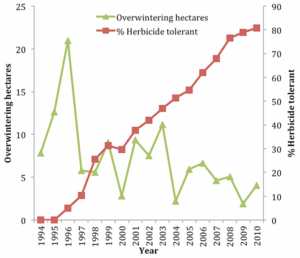
It is apparent that there has been a significant decline in the overwintering monarch population since 2003. This decline is related to the adoption of herbicide tolerant row crops that were first introduced in 1996. The milkweeds in these row crops were shown in 2000 to produce more monarchs per unit area than other monarch habitats. By 2004, the adoption of corn and soybeans genetically modified to resist glyphosate exceeded 51%. The adoption rate by 2010 was 81% (see figure**). Milkweeds are now scarce in this formerly productive habitat. Overall, the amount of habitat lost due to the adoption of these crops may exceed 100 million acres. Learn more about the impact the impacts of herbicides at Monarch Watch.
WHAT IS THEIR STATUS?
In December 2024, the U.S. Fish and Wildlife Service announced a proposed rule to list the monarch butterfly as threatened under the Endangered Species Act, accompanied by a 4(d) rule and critical habitat designation. This proposed rule does not immediately list the monarch under the ESA but marks a significant step in the decision-making process for its protection.
OKLAHOMA'S IMPORTANT ROLE
Exciting news...Oklahoma is centrally located in the monarch migratory path!
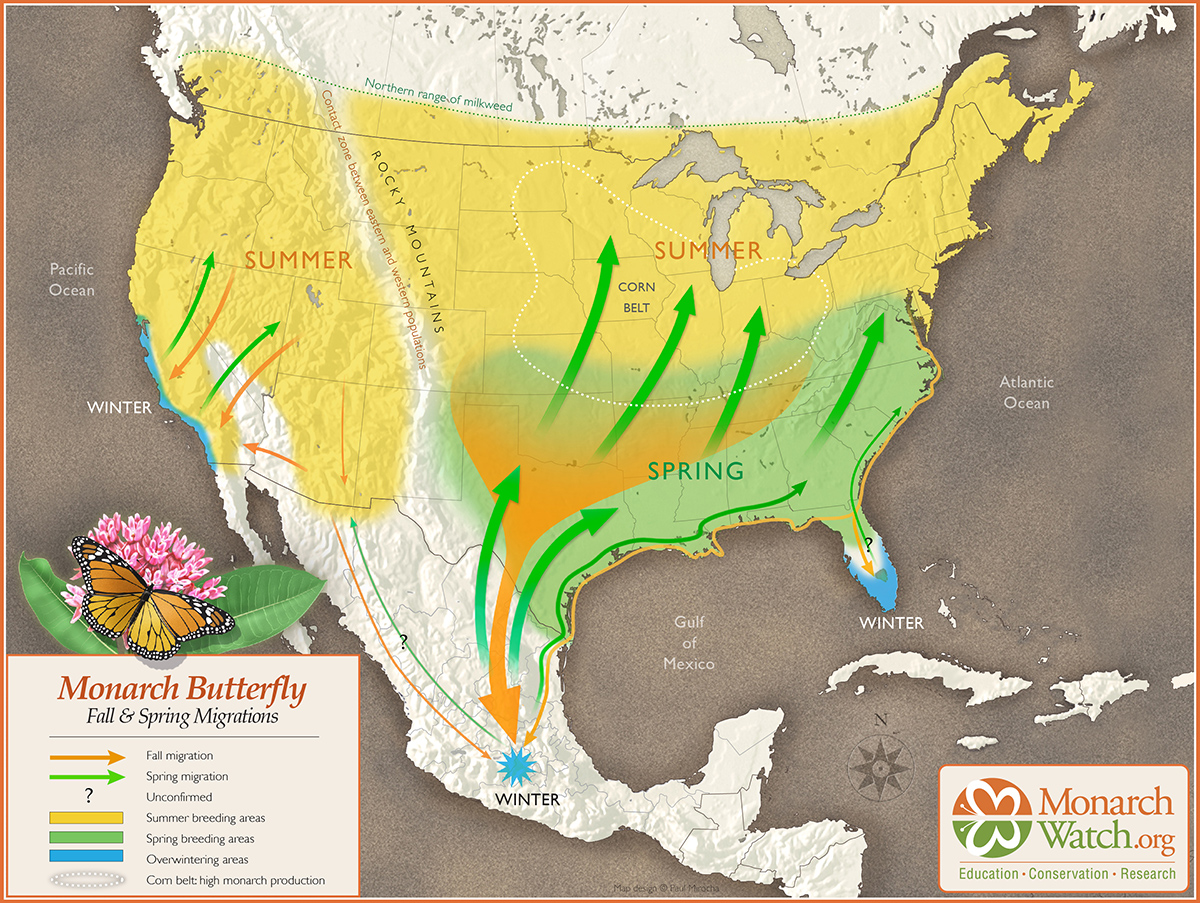

Click on maps to enlarge
In order for Monarchs to thrive, we Okies must provide ample food, shelter and breeding grounds during both their migrations.
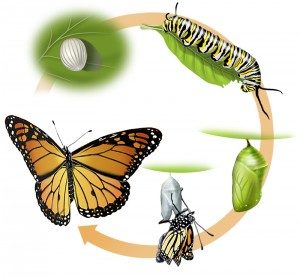
- Spring migration & breeding: Monarchs found in central and eastern US and southern Canada winter in Mexico. Each spring, these butterflies leave Mexico and fly northward through our great state in search of milkweed plants on which to lay their eggs. Once hatched, caterpillars feed exclusively on milkweed.
- Fall migration: Come fall, monarchs funnel back toward Mexico. Along the way, they find refuge in stopover sights with abundant nectar sources and shelter from harsh weather.
Did you know that there are several monarch look-alike butterflies? Learn more about how to identify monarchs.
Show Your Support
Want to help plant the path for monarchs in our great state? Take the pledge and join Okies around the state in enhancing and increasing monarch habitat. Every action adds up to making a big difference.
How to Build a Garden
Ready to get your hands dirty to help save the monarchs?! Check out our tips on how to build a garden. No matter the size, your garden will benefit our fluttering friends. Thank you for your help to plant the path for pollinators!
What to Plant
Now it's time to pick out which colorful plants and flowers to add to your garden... Let the fun begin! We've got regional plant guides waiting for you!