


June 15, 2026

When people think about supporting declining monarch populations, one of the first steps they take is planting milkweed. Because milkweed is the only host plant for the monarch caterpillar, healthy monarch populations depend on an abundance of these native plants.
Milkweed as a Living Ecosystem
While monarchs may be the most recognizable residents, they are only one part of a diverse community that depends on milkweed for food, shelter, and reproduction. Each plant supports a complex and dynamic ecosystem made up of dozens of invertebrate species, including milkweed bugs, aphids, ants, spiders, and many others.
What may appear at first glance to be a simple garden plant is actually a thriving microecosystem. Milkweed supports multiple life stages of many insects and serves as both a food source and a hunting ground. These relationships extend beyond milkweed itself, connecting a broader community of invertebrates and the wider network of animals that depend on them. Let’s take a closer look at some of the other critters that call milkweed home.
Queen Butterflies
The monarch caterpillar isn’t the only butterfly larva you may find feeding on milkweed in Oklahoma. The queen butterfly, a close relative of the monarch, also relies on milkweed as a host plant. While the two caterpillars can appear similar at first glance, they are easy to tell apart once you know what to look for. Monarch caterpillars have bold black, white, and yellow striping with thick, well-defined bands across the body. Queen caterpillars are typically darker in overall tone, with thinner striping and two prominent fleshy filaments along the middle of the body that help distinguish them from monarchs.

Moths
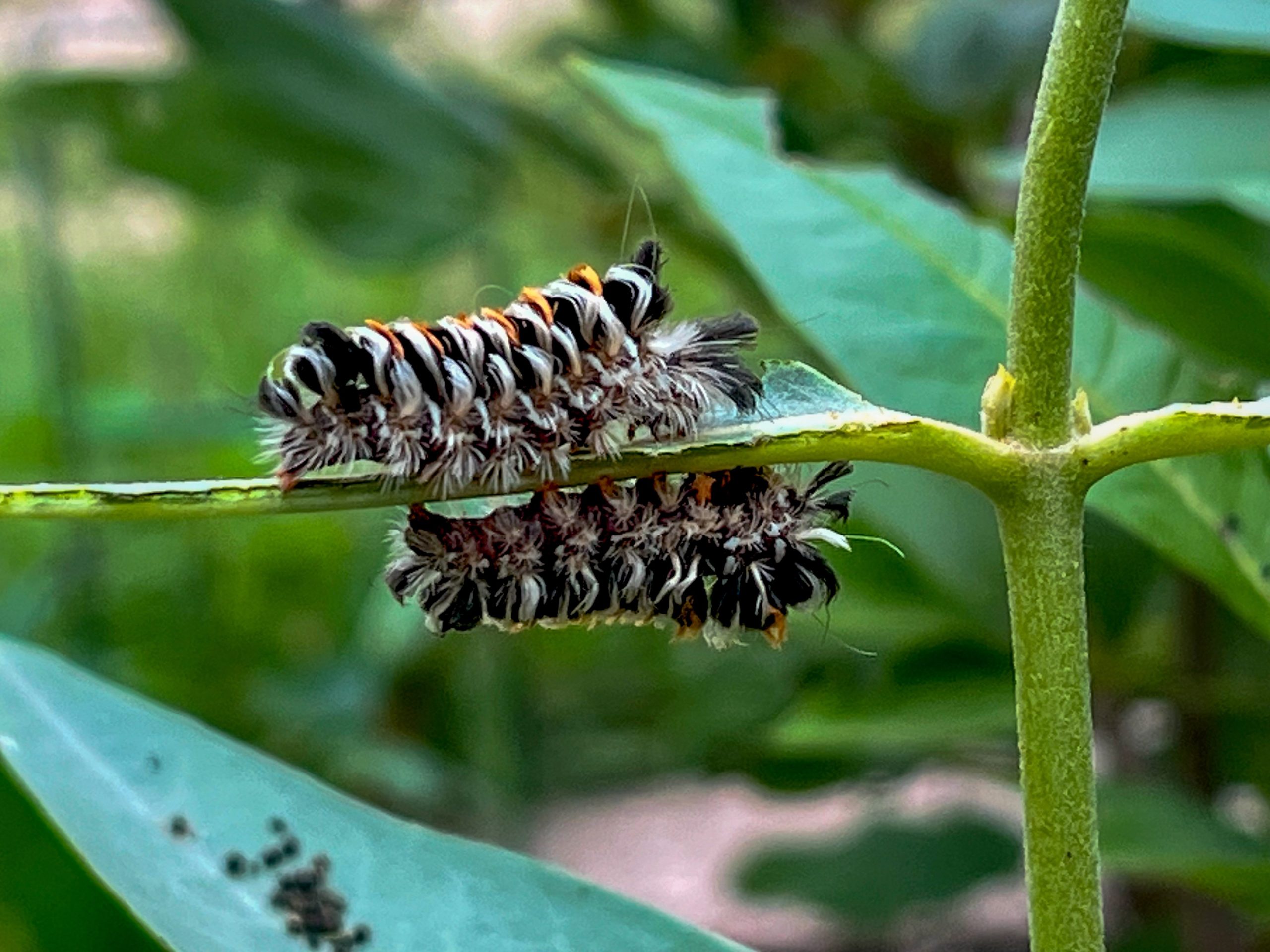
The milkweed tussock moth caterpillar is one of many moth caterpillars that can be found munching on milkweed leaves. The milkweed tussock moth caterpillar, with its fuzzy orange, black, and white tufts, is a common resident of milkweed patches and feeds almost exclusively on milkweed and dogbane. These caterpillars are seldom in competition with monarch caterpillars, as they generally feed on older shoots while monarchs prefer younger shoots. While clusters of caterpillars can heavily defoliate individual plants, they rarely cause lasting harm, as established milkweeds typically recover from their root systems and produce new growth.
The unexpected cycnia moth caterpillar is another native milkweed-feeding moth caterpillar commonly found in Oklahoma. Easily recognized by its bright peachy-orange fuzz, it feeds almost exclusively on milkweed and may occasionally be found in groups.

Ladybugs
The ladybug larva looks almost alien at first glance, an elongated, alligator-like form crawling across leaves with surprising speed. Typically black with bright orange or yellow markings, it is covered in a rough, bumpy exoskeleton and small spines that give it a fierce, armored appearance. Far from harmless-looking, this stage is a voracious predator, consuming 300 to 400 aphids over the two to three weeks it spends growing and developing before pupating, helping keep aphid populations in check. Both the larval and adult stages feed on aphids, mealybugs, mites, and scale insects, making lady beetles important natural controls in garden ecosystems.

Bees
Widely regarded as the most efficient and important pollinators, these insects include a wide variety of species that visit milkweed, such as bumble bees, mining bees, carpenter bees, and even non-native honey bees. As they move from flower to flower collecting nectar and pollen, they play a key role in transferring pollen and supporting the reproduction of milkweed and many other flowering plants.

Flies
Commonly viewed as pests, flies actually serve an important role on milkweed as both pollinators and natural pest controllers. Many adult flies, especially hoverflies, visit milkweed flowers to feed on nectar and help transfer pollen between plants. Additionally, hoverfly larvae are predators of aphids, feeding on them and helping keep their populations in check. Together, these life stages make flies a valuable part of the milkweed ecosystem.

Milkweed Bugs
Both large and small milkweed bugs rely on the plant throughout their life cycle in both nymph and adult stages. Their bold orange and black coloration, similar to monarch butterflies, signals their toxicity to predators. Nymphs feed on roots and internal stem tissue, while adults consume leaves, stems, flowers, and developing seeds.

Aphids
Often clustered along the stems and leaves of milkweed, aphids can be found feeding on the plant’s sugary sap and frequently sending gardeners into an online search frenzy. The honeydew they excrete attracts ants, while both larval and adult lady beetles prey on the aphids. You may also encounter oleander aphids, an introduced species that commonly feeds on milkweed, though native parasitic wasps help keep their populations in check. Fortunately, healthy, established milkweed can usually withstand a moderate aphid population. In fact, aphids play an important role in the garden ecosystem, providing food for beneficial insects such as lady beetles, wasps, lacewings and katydids.

Spiders
Among the most effective predators in this system are crab spiders, which blend into milkweed flowers and ambush visiting insects. While they help regulate aphid populations and other small insects, they may also prey on newly hatched or very small monarch caterpillars, another reminder that milkweed supports a full and interconnected web of life rather than a single species.

Wasps
Among the many insects found in native habitats, wasps play a variety of important ecological roles. While some species visit flowers and contribute to pollination, others serve as valuable predators that help control populations of insects such as grasshoppers, katydids, beetles, and yes, even caterpillars. Their hunting behavior provides a natural form of pest management and helps maintain ecological balance. On milkweed plants, wasps may occasionally prey on monarch eggs and caterpillars, a reminder that every organism plays a role in the complex web of life.

The Importance of Plant Diversity
The most effective way to support monarchs and other pollinators is to not grow milkweed in isolation, but to build a diverse native habitat. Gardens that include a diversity of native plants, with staggered bloom times across the entire growing season, provide continuous resources for pollinators and predators alike resulting in greater balance in insect communities.
For plant selection, see the Statewide Top 12 Plants List and Regional Plant Lists to help build a habitat that supports biodiversity throughout the year.
Natural Checks and Balances
It may be tempting to intervene when aphids, milkweed bugs or other insects become abundant, but a diverse pollinator garden often maintains balance through a complex network of ecological interactions.

Ants, aphids, bees, flies, and countless other organisms are part of a dynamic food web centered on a single plant. What may first appear to be a simple milkweed patch is actually a functioning ecosystem whose value lies not in supporting one species, but in sustaining many at once. Even organisms that seem disruptive are part of this larger balance, and their presence often indicates a healthy, active habitat functioning as nature intended.
Within these interconnected systems, even monarch caterpillars are part of the broader cycle of life, serving as food for other organisms and helping sustain the complex web of relationships that defines a thriving ecosystem.