

There Are Safe & Effective Alternatives

Nobody wants mosquitos visiting while enjoying time outside. These pesky insects can turn a pleasant outdoor gathering into an itchy nightmare. It’s understandable that you may be considering hiring a mosquito-control company to treat your yard by spraying it with insecticide. Maybe you already have.
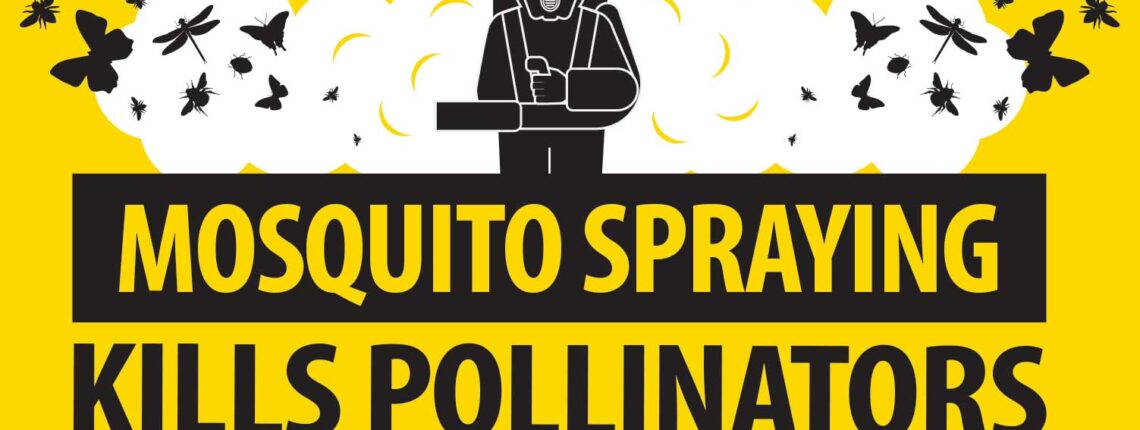
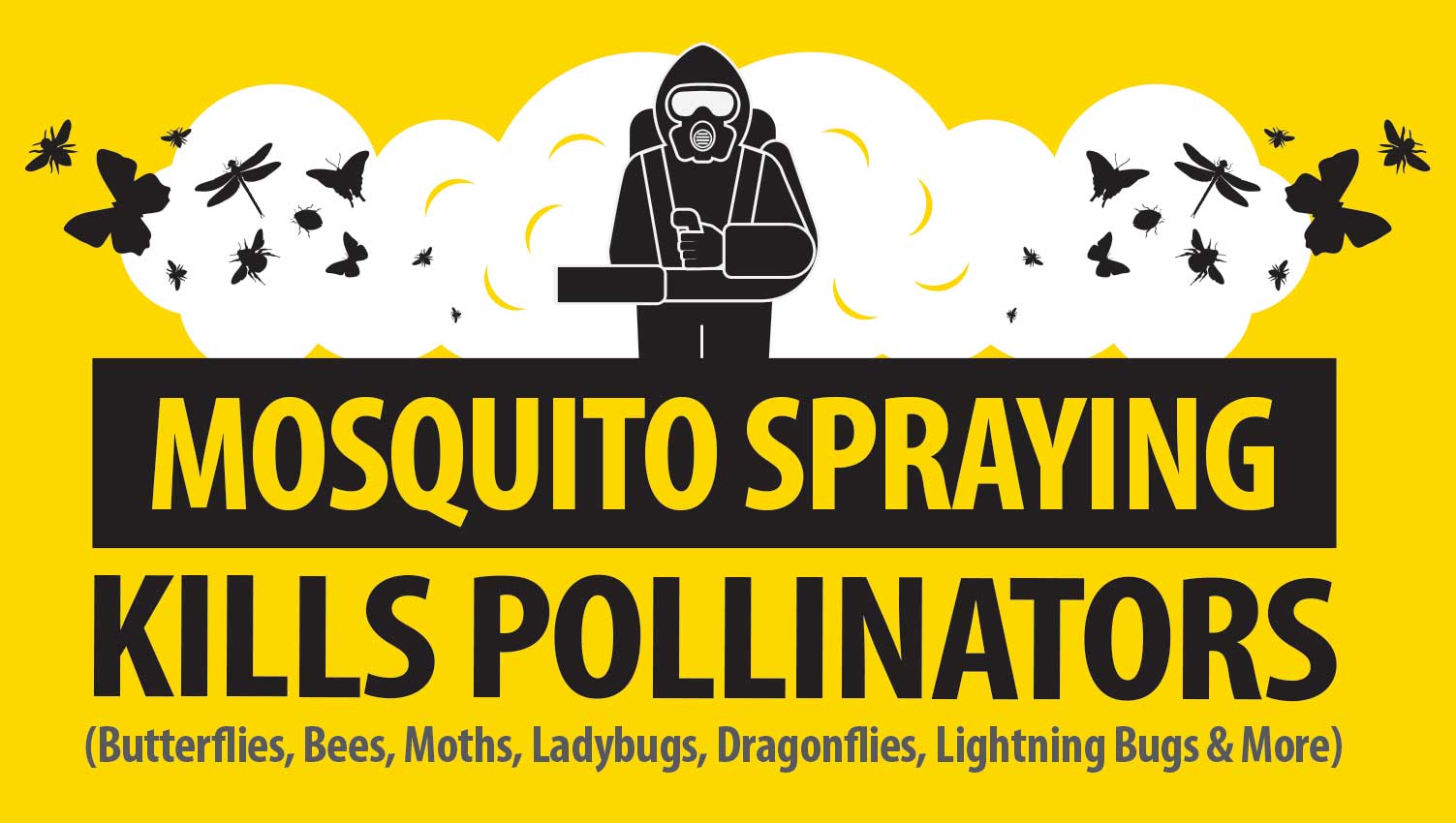
Despite marketing claims, these sprays don’t just kill adult mosquitoes. Most residential mosquito control companies use insecticides known as pyrethroids which kill many beneficial insects like butterflies, bees, moths, ladybugs, dragonflies, lightning bugs, and more. Spraying to kill adult mosquitoes is not the most effective way to manage mosquitoes and should not be part of a home-management strategy.
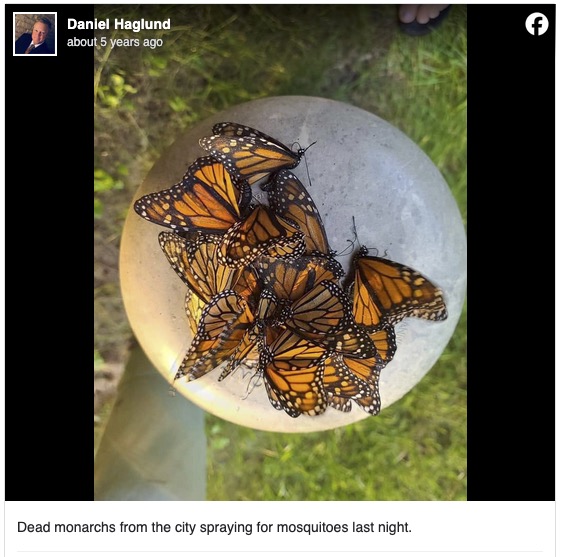 Mosquito-control insecticides have been linked with declines of native pollinators. In 2020, thousands of monarchs passing through North Dakota and Minnesota on their epic migration ran into a cloud of the insecticide permethrin—and perished. Researchers have also documented widespread contamination of honey bee hives with toxic pyrethroids.
Mosquito sprays aren’t just toxic to insects, either. Pets exposed to pyrethroids can experience vomiting, diarrhea, lethargy, and other symptoms. Additionally, runoff can wash these chemicals from our yards into surface waters, where they can poison aquatic organisms such as fish and crustaceans, which are highly sensitive to pyrethroids. Yet permethrin, along with other pyrethroid products, are still frequently used by mosquito-control companies that spray residential backyards across the country, including Oklahoma.
Don’t believe the hype. Terms like “green,” “biodegradable,” “natural,” “derived from flowers,” etc. These buzzwords are intended to make consumers feel comfortable applying pesticides to their properties. Pyrethroid insecticides are enhanced, synthetic versions of natural pyrethrin, which is derived from Chrysanthemum flowers and is deadly to most insects.
“Ironically, targeting adult mosquitos is the worst and by far most expensive approach to mosquito control, because mosquitos are best controlled in the larval stage. This way, you control mosquitoes, and only mosquitos, without the use of harmful insecticides.” -Dr. Tallamy, Nature’s Best Hope

Oklahoma is Vital to Numerous Native Pollinator Species
Our great state is home to an estimated 325+ species of native bees, 170+ species of native butterflies, and 1,600+ species of native moths. Oklahoma is centrally located in the pathway of a variety of migratory species including the monarch butterfly. To support these and many more native pollinators, we Okies must do our part to reduce harm by using safe alternatives to insecticides.
Protect Yourself & The Pollinators
SAFE & EFFECTIVE ALTERNATIVES
Before calling a mosquito control service, first consider a variety of other time-tested and effective strategies to protect you and your loved ones from mosquitoes while also protecting pollinators - as suggested by entomologists, public health organizations, and agricultural extension programs.
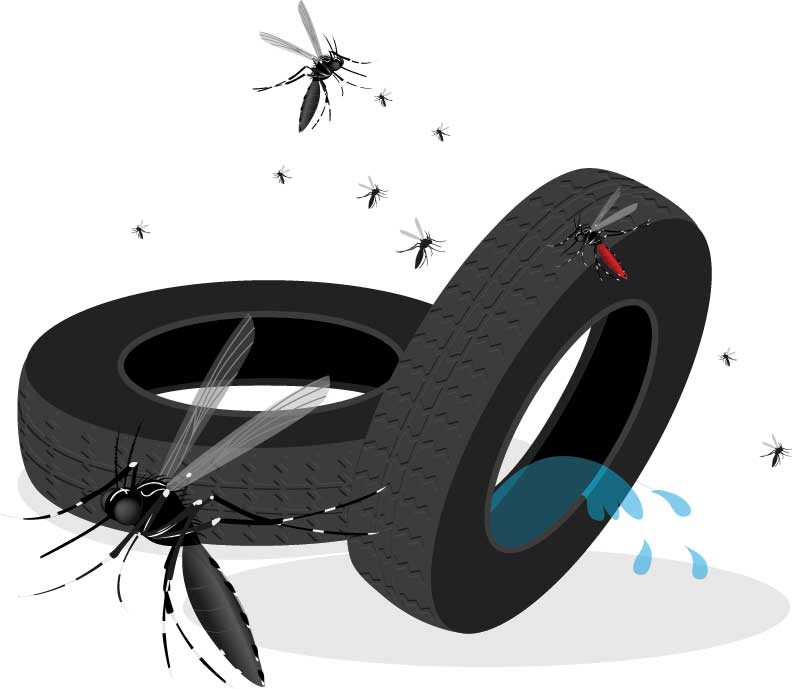 Standing Water & Organic Debris: Regularly eliminating sources of standing water and organic debris–such as flower pots, pet bowls, gutters, tires–where mosquitoes breed. Empty and refill your bird baths every 1-2 days to prevent mosquito larvae from developing.
- Mosquito Dunks: Here’s the BEST way to KILL MOSQUITOS: Add mosquito “dunks” (BTi - Bacillus thuringiensis israelensis) to a bucket of water, fountains, ornamental ponds, etc. These larvicides kill mosquitoes before they become pesky biting adults. > How to Make a Mosquito-Be-Gone Bucket. It’s cheap, effective, safe, nontoxic, easy and doesn’t kill beneficial insects.
 Clothing & Repellent: Protect yourself by wearing light-colored, loose-fitting long sleeves and pants, using mosquito repellent, and keeping screens in good repair. Apply safe, effective insect repellents when outside during mosquito season. Don’t like DEET? Choose a product containing Picaridin or Eucalyptus oil.
- Dense Undergrowth: Maintaining your property to limit dense undergrowth that can harbor adult mosquitoes such as ivy/heavy ground cover.
- Fans: Shoo them away with fans. Mosquitos are weak flyers and will often depart if confronted with a breeze. Research also shows that the current from a fan reduces a mosquito’s ability to zero in on an individual.
- Cedar Mulch: Spread cedar mulch under chairs and tables. Add fresh on top every month or two.
Mosquito-Be-Gone Bucket
The BEST way to KILL MOSQUITOS.
It’s cheap, effective, safe, nontoxic, easy and doesn’t kill pollinators.
The active ingredient is Bacillus thuringiensis israelensis (BTI), which is a natural-born soil bacterium. This prevents mosquito larvae from maturing but doesn't affect other insects or wildlife.
- Fill a 5-gallon dark-colored bucket about halfway full of water.
- Throw in a few handfuls of grass clippings, leaf litter and/or straw, secure wire mesh top or hydroponic bucket lid.
- Let it ferment for 2 days. Female mosquitoes find this CO2 generating concoction an irresistible place to lay their eggs.
- After 2 days, add ¼ of one Mosquito Dunk once a month. Each one covers up to 100 sq ft of water surface area, so for a bucket you just need part of one. You can find dunks at most hardware stores or online.
- Place your Mosquito-Be-Gone Bucket in an out-of-the-way corner of your yard, 20-50 feet away from where you sit/hang out. If you have kids or pets, put the bucket up and out of reach.
- Keep the bucket about ½ full of water, check your bucket often in hot weather.
- Dump the bucket every 2 months or so and repeat the quick and easy process above.
- If you have a larger property, add multiple buckets.
CHILD SAFETY: If there is the remotest possibility that a small child will ever be near your bucket, you must *securely* cover the bucket. “The U.S. Consumer Product Safety Commission warns that buckets filled with water or other liquids, especially the large five-gallon size, present a drowning hazard to small children.”
This “Mosquito-Be-Gone” bucket is based on Entomologist Dr. Doug Tallamy’s Mosquito Larvae Killing Bucket. Dr. Doug Tallamy is a professor in the Department of Entomology and Wildlife Ecology at the University of Delaware, where he has authored eighty research articles and has taught Insect Taxonomy, Behavioral Ecology, Humans and Nature, and other courses for 32 years.
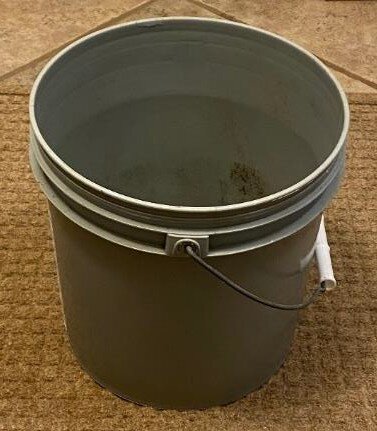

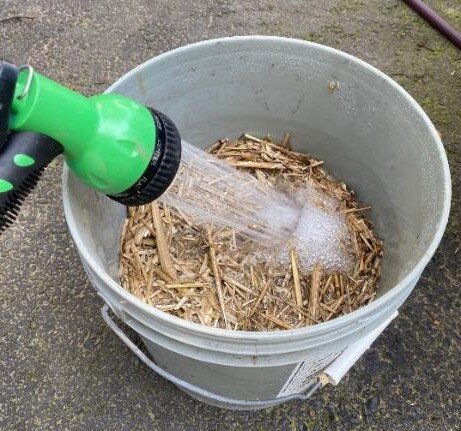
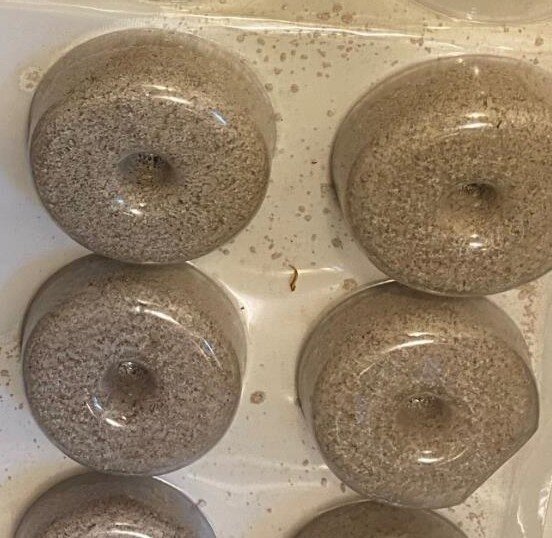
Images by Jill Spohn, NV Bird Alliance.
Where Can I Buy One of These Handy Dandy Contraptions?
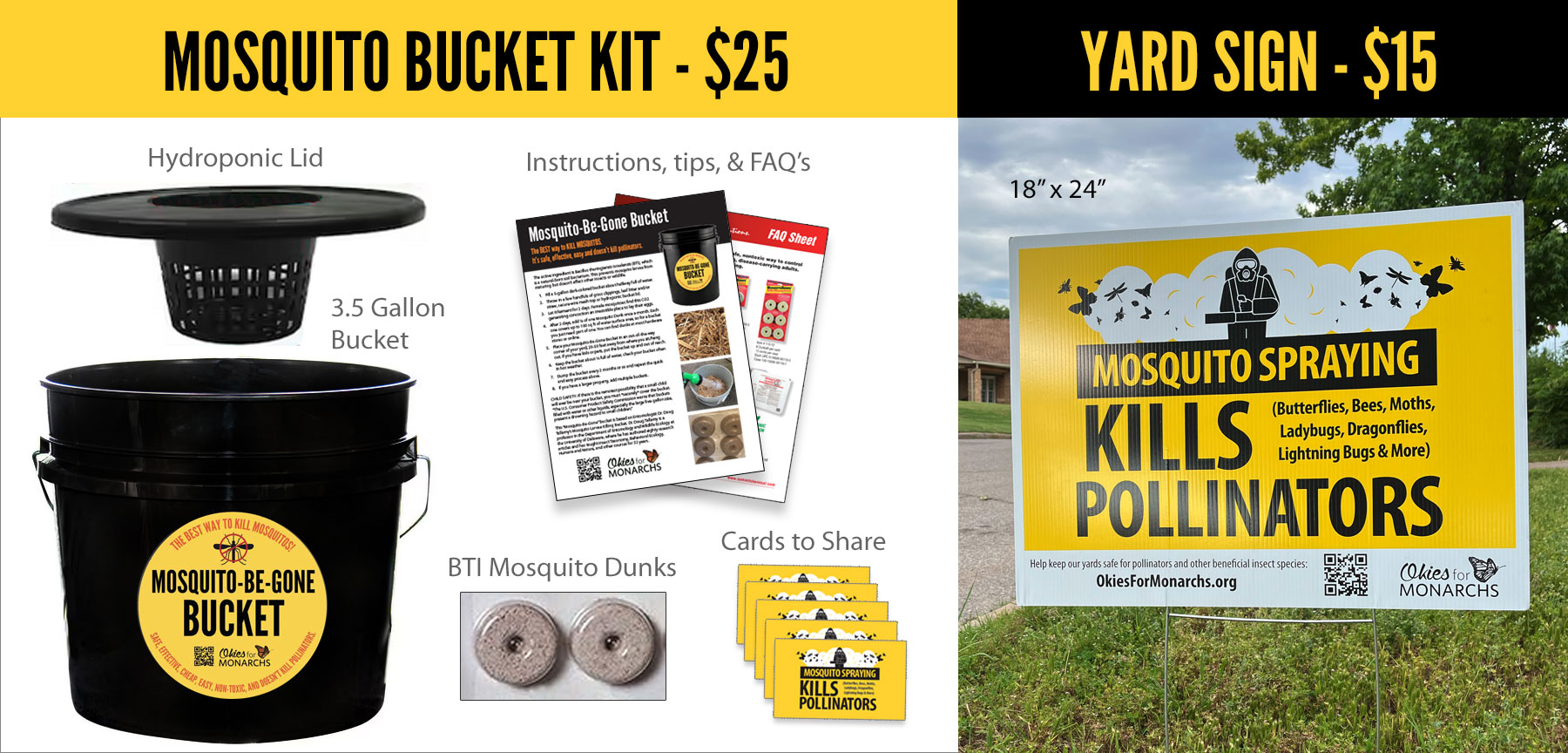
Want to purchase your own pre-made Mosquito-Be-Gone Bucket Kit and a “Mosquito Spraying Kills Pollinators” sign? We are currently taking pre-orders for pickup on June 8 in OKC and June 22 in Tulsa.
Let’s fight mosquitoes the natural way—and save the butterflies and bees while we’re at it. 
 Bring a friend and be part of the change in your neighborhood! Your purchase will support conservation while spreading the word about the lethal danger to pollinators from mosquito spraying.
A portion of proceeds will benefit our efforts to save the monarchs. Your payment will go to our parent organization, the Oklahoma Monarch Society, a 501(c) non-profit organization, EIN #93-4955980.
Additional Resources
- Mosquito Dunks ® Fact Sheet
- Child Safety and Buckets - USCPSC
- Bacillus thuringiensis (Bt) Fact Sheet - National Pesticide Information Center
- Here’s the Best Way to kill mosquitos (1 minute video) - Dr. Doug Tallamy
- How to Protect from Mosquitos Diseases - OSU Extension
- Best Tips for Avoiding Mosquitos- OSU Extension
- Mosquitos & West Nile Virus - OSU Agriculture
- Mosquito Protection Information - OK State Dept. of Health
- Zika Virus, West Nile Virus - OK State Dept. of Health
- Tickborne and Mosquitoborne Illnesses - OK State Dept. of Health
- Fight the Bite: Defeat Mosquitos and Their Diseases - OKC County Health Dept.
- Types of Mosquitos - OKC County Health Dept.
- Protecting Pollinators from Pesticides - Xerces Society
- What You Need to Know Before Spraying for Mosquitoes - Nat'l Wildlife Federation
- Meet the Squad of Mosquito-Eating Species - Nat'l Wildlife Federation
- Make Your Yard a Spray-Free Zone - Nat'l Wildlife Federation