

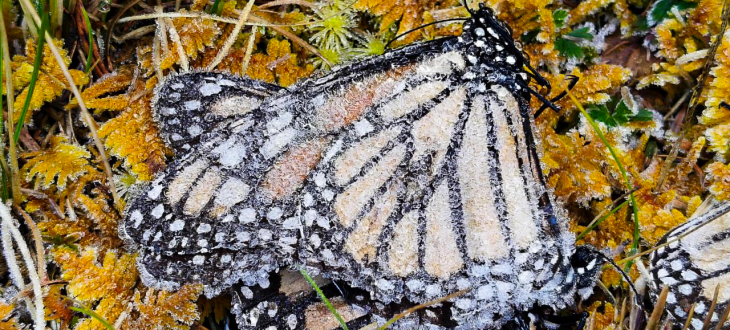
A historical look at how freezes have affected monarchs in their overwintering sites
February 2, 2026
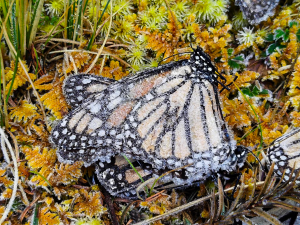
Overwintering monarchs covered in ice crystals in the Monarch Biosphere Reserve. Date and photographer unknown
Each year monarch butterflies migrate thousands of miles to the Monarch Biosphere Reserve in the mountains of Michoacán, Mexico, seeking refuge from winter. However, temperatures in these temperate high-altitude forest mountains can be unpredictable, and ice storms occasionally create deadly conditions for these delicate creatures. Despite these risks, this is the place monarchs depend on to survive the winter.
In February 2025, staff and board members of the Oklahoma Monarch Society traveled to Mexico with the Oklahoma City Zoo and Botanical Garden. While on this trip local biologists showed a photo of a frozen monarch which piqued our curiosity.

We wanted to know more. “It was quite alarming. I hadn’t seen a monarch butterfly or any pollinator covered in ice before. That was a shocking moment to learn that monarchs are experiencing ice storms in their overwintering habitat. It left us with lots of questions about the historical and modern day climate challenges in these forests,” - Katie Hawk, Executive Director of the Oklahoma Monarch Society.
A Protective Sanctuary for the Winter
As Oklahoma City Zoo Conservation Scientist Dr. Emily Geest explains, “Monarchs need to survive the winter on their lipid reserves, stay in reproductive diapause, and avoid drying out. By migrating to a cool, humid place, they conserve energy and maintain this delicate balance. The mountains are that perfect microclimatic zone where it is warm enough for them to survive but not warm enough to force them to use unnecessary energy.”
The oyamel fir forests act as both a blanket and an umbrella. According to Dr. Geest, “The forest provides insulation and helps keep ambient temperatures slightly warmer. It also shields monarchs from rain, keeping them dry and less susceptible to freezing.” Within these forests, monarchs cluster in massive roosts, shivering to generate heat and moving among clusters to regulate their body temperatures. This microclimate allows many of them to survive the winter until spring.
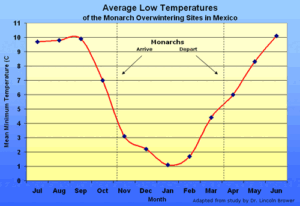 Graph adapted from study by Dr. Lincoln P. Brower, Sweet Briar College. © Journey North
When Winter Storms Turn Deadly
But the Biosphere’s protection is fragile. A sudden freeze can overwhelm even a perfectly timed migration. Dr. Geest notes, “For monarchs to be able to survive the cold, it really depends on if they are dry or have moisture on their bodies. If monarchs remain dry, they can tolerate temperatures as low as 18°F. However, when wet, freezing can occur at just 32.9°F. Sudden freezes are especially dangerous for monarchs that haven’t had time to acclimate.” Even after a long and perilous migration, these tiny insects can succumb to extreme weather.
Historical temperature records for the Biosphere are limited, but it’s clear that sudden freezes can overwhelm monarch colonies with these notable events illustrating the danger:
- January 2002: A severe winter storm struck the Biosphere Reserve, bringing rain and snow that soaked the colonies before temperatures plunged. Wet butterflies froze, and mortality reached 75–80% of the largest colonies at Sierra Chincua and El Rosario — roughly 200–272 million butterflies. Monarch Watch director Orley “Chip” Taylor estimated temperatures dropped below −8°C (18°F) at times.
- March 2016: An unusual winter storm with snow, sleet, and high winds hit just as many butterflies were preparing to migrate. Temperatures fell to or below 32°F (0°C), and canopy damage left butterflies exposed to open-air conditions. Around 30–38% of monarchs in some colonies died, demonstrating how forest protection is crucial to survival.
Sudden freezes in the Biosphere typically last from a few hours to several days, and the longer sub-freezing temperatures persist, the higher the mortality risk.
Vulnerable Yet Resilient
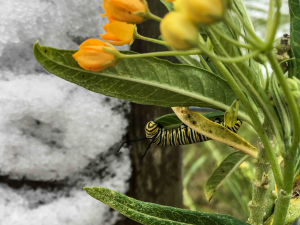
Resilience is also part of the monarch story. Some adults can withstand brief periods of freezing temperatures if their bodies remain dry and even caterpillars are capable of surviving brief cold snaps if they have access to milkweed and shelter. As Dr. Geest explains, “Caterpillars are also able to survive brief bouts of the cold. But similar to adult butterflies, once ice crystals start forming in caterpillars, they can’t survive.”
A Changing Climate, A Vulnerable Species

Climate change adds new challenges to the eastern monarch migration. Sudden storms can damage roosting trees, prolonged droughts can dry out milkweed and reduce nectar, and unexpected freezes can devastate colonies at the wintering sites. These extreme events threaten monarchs at every stage of their journey. Even a perfectly timed arrival may not guarantee survival, since monarchs depend on a delicate network of habitats and climate conditions along the way.
Monarchs are a testament to the strength and fragility of natural systems. Their survival depends on a finely tuned biosphere—forests, climate, and food sources—that nurtures them through extreme conditions. As Dr. Geest reminds us, “Even though a monarch has made it to its destination, it still has to survive the winter.” Each frozen monarch is a stark reminder of how delicate this balance truly is.
How can you help?
Support monarchs during migration
We Okies can help monarch butterflies as they migrate through Oklahoma by rethinking the conventional, water-thirsty lawn. Maintaining a green, weed-free yard often requires heavy irrigation and fertilizers or herbicides—many made from petrochemicals, a major and growing source of carbon emissions.
Planting native pollinator habitat instead captures atmospheric CO2, storing it deep in the root system and healthy soils, acting as natural “carbon sinks” that reduce greenhouse gases. Additionally, these plants reduce water use, manage stormwater, and provide critical food and shelter for monarchs and other pollinators. This simple shift—from lawn to living landscape—is an easy, effective way to support wildlife and environmental sustainability.
To get started, fly on over to our What to Plant and Where to Buy webpages. There, you’ll learn which native milkweeds–their host plant–and wildflowers are best for your region, as well as search for local vendors throughout the state.
Support monarchs in their overwintering grounds in Mexico
- Forests for Monarchs – Over 13.5 million trees planted since 1997 to restore monarch overwintering habitat.
- Alternare – Working for 22 years, Alternare partners with local communities to reforest the Monarch Butterfly Biosphere Reserve.